Welcome to an exploration of the transformative potential of high-performance facades, brought to you by Dtech Corporation. In today's rapidly evolving architectural landscape, the facade of a building is no longer merely an aesthetic element but a dynamic component with the power to revolutionize energy efficiency, occupant comfort, and overall building performance.
Dtech Corporation stands at the forefront of innovation, pioneering cutting-edge solutions that redefine the boundaries of facade technology. Through meticulous research, engineering expertise, and a commitment to sustainability, Dtech has unlocked the secrets to creating facades that not only enhance the visual appeal of structures but also significantly reduce energy consumption and environmental impact.
In this informative journey, we will delve into the myriad benefits of high-performance facades, from optimizing natural light utilization and thermal insulation to harnessing renewable energy sources and mitigating noise pollution. We will uncover how Dtech's innovative facade systems seamlessly integrate advanced materials, intelligent design, and state-of-the-art technologies to elevate building performance to unprecedented levels.
High-performance building facades are engineered systems meticulously designed to optimize energy efficiency, enhance occupant comfort, and minimize environmental impact. Unlike conventional facades, which primarily serve as decorative elements, high-performance facades integrate advanced materials, innovative technologies, and sustainable design principles to achieve superior performance across various metrics.
At Dtech Corporation, we are at the forefront of revolutionizing building envelopes, crafting solutions that seamlessly blend efficiency with elegance. Let's explore how these high-performance facades can transform your project:
The process of building facade design requires the creative collaboration of its architects, engineers, and facade designers. Let's have a look at the key considerations they must pay heed to create high-performance building facades.
A facade designer should take into account a building's location, the path of the sun, and the surrounding buildings and landscape. By studying this, they can decide the appropriate size and placement of shading devices, such as overhangs, louvres, and shades. This can reduce solar heat gain and improve the energy efficiency of the building.
Effective insulation is essential to ensure a facade performs to its optimal level and achieves energy efficiency. The use of high-performance insulation materials such as spray foam, mineral wool batts, foam boards, and cellulose can improve a building’s thermal comfort and reduce energy loss through the building envelope. The use of low-emissivity coatings on glazing can further enhance the thermal performance of the building facade design by reducing heat transfer.
Cross ventilation and uninterrupted airflow through a building can improve its indoor air quality, reduce moisture buildup, and regulate temperature. The use of natural ventilation, such as operable windows and vents can promote airflow and reduce the reliance on mechanical cooling systems. Designers can use Computational fluid dynamics (CFD) modelling to help optimise ventilation strategies by predicting airflow patterns and identifying areas of high pressure and low velocity.
The use of natural light can reduce the need for artificial lighting and enhance occupant comfort and productivity. The selection of glazing and its performance characteristics, such as visible light transmission, solar heat gain coefficient, and U-value, can impact the amount and quality of daylight entering the building. Using high-performance glazings, such as double- or triple-pane glass with low-E coatings, can significantly improve the facade's daylighting performance.
The selection of facade materials can impact the building's environmental footprint and long-term durability. The use of eco-friendly materials such as low-VOC coatings, and FSC-certified wood can reduce the building's embodied energy and carbon emissions. Further, doing a computational Life Cycle Assessment (LCA) can help determine the environmental impact of various material choices and identify areas for improvement.
The use of durable and low-maintenance materials can reduce the need for frequent repairs and replacements. Materials should be selected based on their resistance to weathering and corrosion to reduce the building’s life cycle costs. Additionally, the building facade design should allow for easy accessibility, cleaning and maintenance.
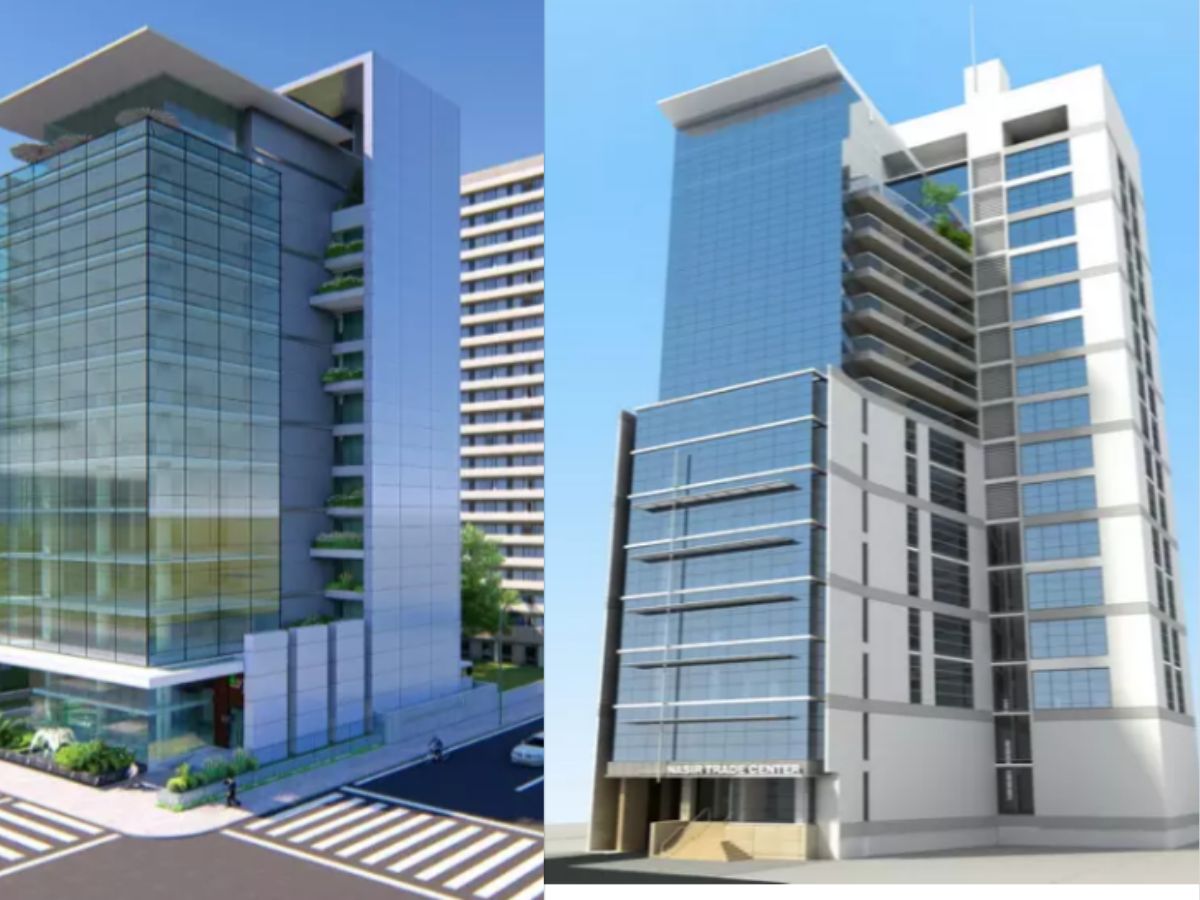
Nasir Trade Centre stands tall as a beacon of bustling activity, its 16 floors adorned with a tapestry of diverse offices and shops, each brimming with its unique charm and purpose. Nestled amidst the vibrant heartbeat of Dhaka, Bangladesh, this architectural marvel beckons with promises of opportunity and connectivity.
Within its walls, a symphony of commerce unfolds, orchestrated by the tenants who call it home. Among them, the esteemed headquarters of Healthcare Pharmaceutical Company Limited reigns supreme, a bastion of innovation and compassion. Located at the prestigious address of 89 Bir Uttam, CR Dutta Rd, this haven of healing exudes warmth and professionalism in equal measure.
Limited though the car parking may be, the true wealth of Nasir Trade Centre lies not in its physical space, but in the intangible richness of its community. And as visitors ascend its floors, guided by the gentle hum of three elevators, they are welcomed into a world where ambition meets opportunity, and dreams take flight amidst the sweet whispers of success.
It is a Construction of 14 (Fourteen) Storied Mir Onyx-Yakub Tower with 3 (three) Basements Commercial Building at Plot No.17 (Old-21) Road No.6, Dhanmondi R/A, Dhaka. The work consists of construction of Civil ,Facade glass,Sanitary & Water supply, painting, Internal Electrification, Sub-station, Generator, BBT, Lift, Ventilation, Fire Detection, Fire Protection, ACP, Stick System Certain Wall, Spider Glass Fixed Sliding Window, Fixed Partition with Sliding Window & Z-Lovour.
Conclusion
In conclusion, DTech Corporation Ltd has demonstrated a steadfast commitment to excellence in designing high-performance facade work. Through innovative solutions, meticulous attention to detail, and a deep understanding of architectural dynamics, DTech has consistently delivered projects that not only meet but exceed client expectations. The company's blend of cutting-edge technology and artistic vision has positioned it as a leader in the industry, capable of tackling the most complex design challenges with finesse and precision. As DTech continues to push the boundaries of facade design, it remains poised to shape the skylines of tomorrow with its signature blend of ingenuity and expertise.